
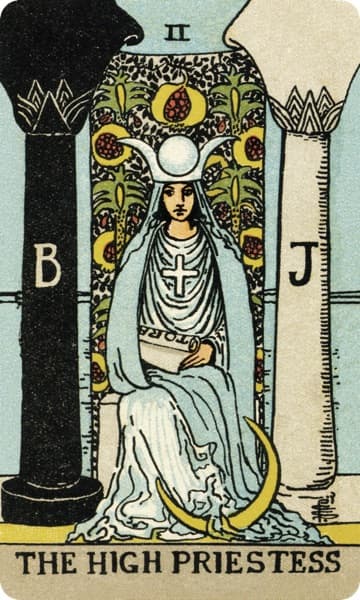
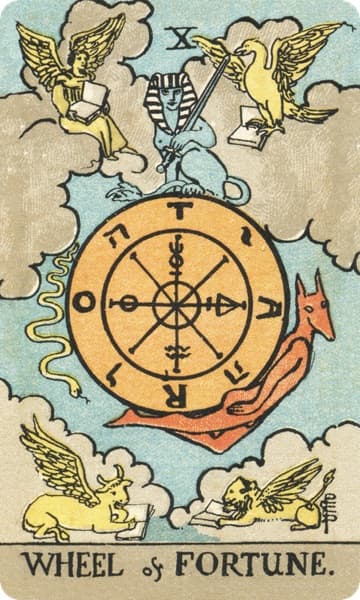

There is a moment many tarot readers know well. You enter a reading with one question, leave with ten new thoughts, and still do not know what to do next. The spread felt meaningful. The language sounded insightful. But your decision is still stuck.
When this happens, the weak point is usually not card interpretation. It is question design.
A question like “What will happen?” invites abstract symbolism. A question like “Within the next 14 days, what action should I prioritize to choose between option A and option B?” invites directional clarity. Better questions do not remove uncertainty, but they transform uncertainty into movement.
This guide is for that transformation. You will learn how to rewrite vague prompts into decision-ready tarot questions, how to run a stable workflow, and how to keep narrative readability while preserving SEO depth.
Why anxious prompts create unclear readings
Anxiety naturally seeks certainty. That is why people ask questions like “Will they come back?” “Will I fail?” or “Is this my destiny?” These questions are emotionally legitimate, but operationally weak.
They often lack context, remove agency, and provide no measurable review criteria. As a result, they tend to trigger repeat-reading loops: temporary reassurance followed by renewed uncertainty.
The practical fix is not to suppress emotion. It is to structure the question so emotion has somewhere productive to go. A strong tarot prompt should define the decision context, identify controllable leverage, and establish what progress would look like in observable terms.
The CLEAR framework: from emotional question to decision question
The CLEAR framework gives you a repeatable question architecture.
Context means naming the real situation: what is happening now, what decision point you face, and what constraints are active. Without context, even good cards become generic.
Leverage means asking what you can influence. Prompts focused on your actions, communication choices, timing, boundaries, and risk management produce far better practical outcomes than prompts focused on guaranteed outcomes from others.
Evidence means defining success signals before reading. If you do not define what “better” means, you can interpret any card to fit your preference.
Alternatives means comparing actual options. Tarot becomes significantly more useful when it evaluates pathways (A vs B), not feelings in isolation.
Range and Risk means setting a decision window and boundaries. This prevents endless reassurance-seeking and forces execution discipline.
CLEAR is not a spiritual formula. It is a decision language protocol.
A reusable one-line template
Use this line before each reading:
“Within [time window], in [specific context], if I choose [Option A vs Option B], what controllable actions should I prioritize to achieve [desired outcome] while reducing [main risk]?”
This template works because it requires five essentials in one sentence: context, options, agency, objective, and constraints.
A stable 10–15 minute workflow for online tarot reading
Consistency matters more than inspiration. Start by writing your question before opening cards. Then run a quick quality check: specific context, controllable actions, clear timeframe, and explicit options. If two or more are missing, rewrite first.
Choose a spread that matches your decision stage. For rapid clarity, use a three-card format (situation, friction, advice). For alternatives, use A/B comparison. For sequencing, use short-term/mid-term/checkpoint.
Before reading AI interpretation, document your own first pass. Note what appears factual, what risk seems central, and one action feasible in 24–72 hours. Then layer AI interpretation as a second perspective, not a replacement.
Finish with a short decision card: current choice, priority action, deadline, review date, and fallback move. This is where insight becomes execution.
Real-world rewrites: vague vs decision-ready
In career contexts, “Will I get a better job?” is weak because it ignores timeline, options, and strategy. A stronger version is: “In the next 30 days, if I choose internal transfer versus external applications, what should I prioritize to improve growth while preserving financial stability?”
In relationship contexts, “Are they my person?” often creates projection. A stronger version is: “Over the next two weeks, what communication and boundary actions would increase clarity and emotional safety in this dynamic?”
In money contexts, “Will I be rich?” is not actionable. A stronger version is: “Over the next six months, should I prioritize debt reduction or initial investing first to improve stability and reduce stress?”
In creative work, “Will my project succeed?” is too broad. A stronger version is: “This week, what is the highest-leverage action for launch progress, and what blind spot could undermine execution?”
These rewrites show the same pattern: better constraints create better guidance.
Why this structure supports SEO without sounding robotic
Good SEO content is no longer about keyword repetition. It is about matching full search intent. Users searching “tarot questions,” “online tarot reading,” or “how to ask tarot questions” usually need more than definitions. They need diagnosis, framework, examples, workflow, and practical next steps.
That is why this article naturally includes semantic clusters—tarot questions, decision-making, online tarot, self-reflection, action planning—inside complete sections with clear reader utility. This improves topical depth, readability, and retention simultaneously.
Narrative clarity and search performance are not opposites when the content solves real user tasks.
Common mistakes that keep readers stuck
A common error is binary yes/no framing for multi-variable decisions. Another is repeated pulling until a preferred message appears. A third is mixing multiple life domains into one reading. These patterns inflate emotional noise and reduce practical value.
Other recurring issues include no timeline, no follow-through plan, and reading in emotional flooding states. If your question has no action pathway, your interpretation will likely stay conceptual.
A simple correction rule: no repeat reading until the previous action cycle is completed.
FAQ
How specific should my tarot question be? Specific enough that a neutral reader can understand your decision context in one sentence.
Are yes/no questions always bad? Not always, but for complex decisions they are usually too narrow.
How often should I read on the same issue? Usually once per cycle, then execute and review. Re-read after meaningful new evidence appears.
What if cards feel contradictory? That often indicates mixed framing, unclear criteria, or competing internal priorities.
Can tarot replace practical planning? No. Use tarot alongside real tools: budgets, timelines, conversations, contracts, and expert guidance when needed.
Final takeaway
Clear tarot outcomes begin with clear tarot questions.
When your prompt includes context, leverage, evidence, alternatives, and boundaries, readings become more useful and less emotionally chaotic. Ask toward action, and clarity becomes cumulative.
Disclaimer
Tarot is a reflective tool, not a substitute for legal, medical, financial, or mental health advice. For high-stakes decisions, seek qualified professional support. Use tarot to improve clarity and responsibility, not to avoid them.