

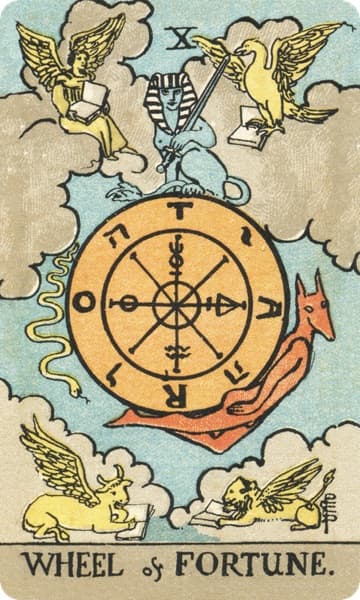

At some point in their career, almost everyone reaches the same uncomfortable place: too many plausible paths, no guaranteed outcome, and rising decision fatigue. Stay and optimize? Switch and reset? Pivot into a new function? Build an independent track? Every path has upside stories and cautionary stories.
That is why career crossroads feel heavy. The question is rarely “Do I have options?” The question is “How do I choose without gambling blindly or stalling forever?”
Tarot can be helpful at this stage, but only when used as a decision support tool—not a fate machine. It can surface assumptions, hidden fears, and priority conflicts. It cannot replace external evidence, financial reality, or execution discipline.
This guide gives you a complete method for turning insight into action: define the decision, structure interpretation, validate externally, control risk, and execute a 14-day decision sprint.
Why career choices feel harder than they look
Career decisions combine multiple uncertainty layers at once: income stability, growth trajectory, identity signaling, market timing, and personal constraints. You never get perfect information before commitment, and the consequences often appear months later.
Under this pressure, people tend to default to one of two patterns. Pattern one is impulsive commitment—high action, low validation. Pattern two is analytical paralysis—high research, low execution. Both feel rational in the moment, and both can be costly.
The goal is not perfect certainty. The goal is a structured process that improves judgment while protecting downside.
What tarot can do in career decisions (and what it cannot)
Tarot can support clarity around internal conflicts that are easy to feel but hard to articulate: security vs acceleration, recognition vs autonomy, immediate compensation vs long-term capability. It can also reveal emotional bias: fear of status loss, fear of restarting, fear of visible failure.
But tarot cannot tell you whether a hiring manager is reliable, whether a startup runway is healthy, whether your contract terms are safe, or whether your household cash flow can absorb volatility. Those require external verification.
A practical boundary is: tarot generates hypotheses; career execution tests hypotheses.
The CROSSROAD method: six steps that create decision traction
Start by writing one singular decision question with a clear time horizon. Ambiguous identity questions are useful for reflection but weak for action.
Use a five-position decision spread: current tension, Option A trajectory, Option B trajectory, hidden factor, and immediate next move. For each card, force a three-part translation: one insight, one action, one evidence check.
Then map interpretation into fixed decision variables: income/runway, learning velocity, transferable career capital, reversibility, and stress load. Fixed variables reduce narrative drift.
Next, score options across impact, controllability, reversibility, and resource fit. You can use a simple prioritization heuristic: Priority = Impact × Controllability × Reversibility ÷ Resource Cost.
After scoring, run scenario planning for each option: best case, base case, worst case, with trigger signals and mitigation actions. Finally, run a 14-day low-regret validation cycle before full commitment wherever possible.
This sequence turns emotional complexity into practical progression.
A realistic scenario: promotion path vs early-stage AI role
Imagine a mid-career product manager in a stable large company, considering a move to a smaller AI startup. Option A offers structure and compensation predictability. Option B offers learning speed and scope expansion, but with higher variance and potential instability.
If the reading points to decision delay as the core tension, the first action is not another week of browsing. The first action is setting a decision timeline and evidence list. If Option A shows structural strength, translate that into manager alignment on concrete advancement criteria. If Option B shows dynamic upside with volatility, translate that into direct checks on runway, role authority, and execution environment.
A frequent hidden risk here is financial overestimation of risk tolerance. People assume they can absorb volatility until fixed costs expose pressure points. A simple mitigation is a six-month stress-tested household model before committing to a higher-variance path.
The resulting decision is usually conditional rather than absolute: choose the path that best fits your current constraints while preserving optionality.
Risk controls that prevent expensive mistakes
Good decisions are often less about perfect insight and more about robust safeguards.
First, control confirmation bias. Require disconfirming evidence for your preferred option and include at least one informed dissenting review. Second, control financial downside with explicit runway thresholds and non-negotiable red lines. Third, protect career capital continuity by shipping transferable assets weekly (case studies, frameworks, measurable outputs). Fourth, monitor load risk through simple weekly signals: sleep stability, focus quality, and stress trend.
Also define three written stop-loss rules: a time stop-loss (conditions unmet by date), a cash-flow stop-loss (runway threshold breach), and a role-integrity stop-loss (persistent mismatch between promised and actual scope). Written stop-loss criteria reduce emotional goalpost shifting.
The 14-day execution sprint
Days 1–3: define the decision clearly, run the five-position spread, and convert each card into insight/action/evidence.
Days 4–6: gather external market and role data, run targeted conversations, and update option scores with evidence confidence.
Days 7–9: build best/base/worst scenarios, run a pre-mortem, and assign mitigation actions to top risks.
Days 10–12: execute one low-regret experiment (targeted applications, internal pilot proposal, scoped consulting test, or destination-role artifact).
Days 13–14: choose commit/continue-testing/postpone, write a 60-day map, and communicate with stakeholders.
This sprint does not remove uncertainty; it converts uncertainty into structured evidence.
SEO and narrative depth can reinforce each other
Career decision content performs better when it satisfies full user intent, not just keywords. Readers searching “career tarot,” “career crossroads,” “stay or switch,” or “career decision framework” usually need emotional recognition, practical method, risk controls, and action sequencing in one place.
That is why this article intentionally integrates semantic clusters with execution detail instead of keyword stacking. The result is stronger readability, richer topical depth, and better long-term search relevance.
FAQ
Can tarot tell me which offer to accept? It can clarify priorities and blind spots, but final selection should rely on verified role data and constraints.
How often should I read on one career decision? Usually once per cycle, then execute. Re-read after meaningful new evidence.
What if cards look negative? Treat them as risk prompts and mitigation cues, not fixed outcomes.
What if options score similarly? Start with the more reversible, lower-downside move and continue evidence collection.
Disclaimer
This article is for educational and reflective purposes only. It is not financial, legal, medical, or mental health advice. Use tarot alongside evidence-based career research, practical risk planning, and qualified professional support where needed.
The goal is not perfect prediction. The goal is better decisions under real uncertainty.